LifeStraw Personal Reviews: See Why 0 Shoppers Rated It 0 Stars!
Everyone’s talking about the LifeStraw Personal water filtration system, but what’s the full picture? We’ve pulled 0 real reviews on these LifeStraw water filtration systems — with pros, cons, and context.
 Supermod
  Moderator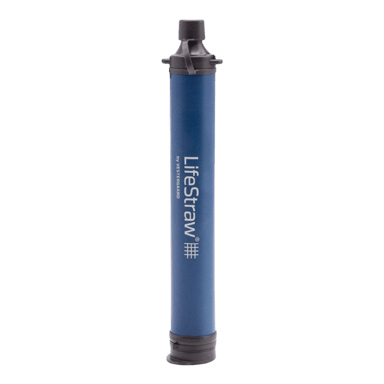
 Recaptor
 LifeStraw Personal Straw Review: The Classic Pocket-Sized Purifier That Still Makes Sense
The LifeStraw Personal Straw has a reputation that precedes it, and for good reason. This compact, sip-and-go filter aims to turn questionable water into drinkable water without batteries, pumps, or plumbing. In this review of the LifeStraw Personal Water Filter, I’m looking at what the specs tell us about its real-world value: what it’s designed to remove, how it’s built, and where it fits in your pack (and your budget). Officially named the LifeStraw Personal Water Filter, it’s built for simplicity—no moving parts, no power, just a straw that removes the nasty stuff as you drink.
Detailed Specs & Features
On paper, LifeStraw’s role is clear: rapid, personal hydration in the backcountry, during travel, or in a pinch. The company calls out its target scenarios right away—see the multi-situation Outdoor, Travel, Hiking, Camping, Emergency use. Unlike full-blown under-sink systems, this is a one-person solution you toss in a pack and forget about until you need it.
At its core is a straightforward, single-stage setup built around a membrane microfilter. That membrane is rated at a tight 0.2 micron, small enough (according to the specification) to block common bacteria and many parasites. The contaminant playbook is broad for a straw: the sheet lists bacteria, parasites, microplastics, dirt, sand, and cloudiness. Notably, it also claims 99.99% bacteria removal—that’s the headliner for a device at this size.
Water sources? The spec sheet is surprisingly flexible, calling out Tap Water, Well Water, River Water, and Rainwater. In other words, it’s pitched as a universal fallback. Does that mean it replaces a home system? Not really. It’s a point-of-use straw—excellent for emergencies, day hikes, and as a backup filter when you’re traveling light.
Because this is a human-powered device, there’s no need to charge, plug in, or prime pumps. The “power system” is simply you: manual. Fewer electronics mean fewer things that can fail in the field. It’s also built with lightweight materials—the housing is plastic, explicitly called out as BPA-free, and the finish is matte, which helps hide scuffs and fingerprints during rough-and-tumble travel.
From a compliance standpoint, LifeStraw’s paperwork is a plus for peace of mind: the sheet lists NSF/ANSI 231 and US EPA in the certifications field, signaling standardized testing methodology behind the claims. There’s also a limited warranty noted, which we’ll unpack later, but the gist is you’re not buying a mystery tube—there’s documented testing and a baseline of support if something’s off.
A few numbers jump out. The dimensions are compact—approximately 9 inches tall and 1 inch in width and depth—making it easy to slot into side pockets or first-aid kits. Lifespan is listed as “4000 liter/month,” which reads like a capacity metric for the cartridge rather than a forced monthly quota; practically, most buyers will interpret that as “long-lasting under typical outdoor use,” with usage patterns being the real determinant. And while the table calls out a “Daily Filtration Capacity” of 1000 gallons per day (that’s a theoretical ceiling rather than a realistic field rate), the functional message is the same: this is meant for frequent sips, not filling jugs for a whole campsite.
It’s also worth flagging what this straw is not meant to do. There’s no activated carbon stage, so taste and odor improvement is listed as “Yes” but without carbon that would likely come from turbidity reduction rather than chemical adsorption. There’s no UV, no RO membrane, and no ion exchange, so things like fluoride reduction, chloramine treatment, or heavy metal removal are “No” or “n/a” on the sheet. In simple terms: it’s a biological and particulate defense line first; for complex chemical issues, you’d want a different tool in your kit.
User Experience & Performance (Based on Specs)
Design & Build
According to its design, the LifeStraw Personal Straw is purpose-built for durability and ease. The plastic shell, O-ring sealing, and compact profile are geared for grab-and-go use where failure is not an option. The matte finish and corrosion resistance are small but welcome touches. At a listed 1.6 lbs in the table, it reads heavier than you might expect for a straw; in practical terms, the form factor remains hyper-portable thanks to the 9-inch height and 1-inch tube footprint. If you want to travel ultralight, the shape matters more than the number—it slides into nooks most bottles can’t.
Performance
On paper, the 0.2-micron membrane should be highly effective for bacteria and many protozoa. The “99.99% bacteria removal” figure is the headline spec, and turbidity reduction (i.e., clearing up cloudy water) supports both aesthetics and downstream safety. Because there’s no pump, your mouth provides all the draw; expect a firmer pull through the membrane compared to a regular straw. The lack of multi-stage components simplifies maintenance: there’s no pre-filter to swap, no carbon stage to saturate, and no UV lamp to protect.
What surprised me most in the spec sheet is the breadth of listed source compatibility—tap, well, river, rain. That said, it’s a defensive tool for biological risks, not a cure-all. If your use case is heavily chemical (old pipes with metals, agricultural runoff with pesticides, or persistent chlorine/chloramine taste), the single-stage microfilter isn’t designed for that. Still, for hikers and emergency kits, the LifeStraw’s simplicity is the feature. No batteries. No priming routines. No spare gaskets to hunt down.
Extra Features
There’s no app, no readouts, no LED—just reliability. The environmental story is straightforward too: the spec sheet lists 100% water efficiency (no brine/wastewater like RO systems) and recyclable components with a filter recycling program. In the field, less waste means less to carry out. The operating window of 35–100°F is reasonable for three-season use. Finally, there’s mention of a limited warranty, which, paired with standardized certifications, rounds out the “trust but verify” checklist.
Pros & Cons
Pros
- Simple, field-ready design with no batteries, pumps, or moving parts.
- 0.2-micron membrane targets bacteria and turbidity for safer, clearer water.
- Compact 9" form factor fits in packs, glove boxes, and emergency kits.
- Certifications (NSF/ANSI 231, US EPA) add assurance to the performance claims.
- BPA-free build and 100% water efficiency—no wasted water during use.
Cons
- Single-stage filtration means limited help with chemicals (chlorine, chloramine, heavy metals, VOCs).
- Straw format isn’t ideal for filling bottles or serving multiple people at once.
- Listed daily capacity appears theoretical; real-world use is sip-by-sip, not bulk filtration.
Price & Value for Money
Affordability is a big part of LifeStraw’s appeal. Based on the pricing info provided, you can expect a straightforward, low entry point: $17.95 at LifeStraw.com. For a device that promises 0.2-micron filtration and a broad defense against bacteria and parasites, that price is compelling—especially for an emergency kit, a travel backup, or a redundancy option when your main purifier fails. If you’re shopping for a family or planning to filter for several people, you may want multiple straws or a different format (like a squeeze bottle or gravity system), but for the solo hiker or minimalist traveler, the cost-to-benefit ratio is hard to beat.
Quick Take
If you want the simplest possible safety net for questionable water, LifeStraw’s personal straw is still an easy recommendation. It’s compact, human-powered, and focused on biological threats first. On the flip side, it’s not built for chemical-heavy water or bulk output—so pair it with the right tool for your specific trip.
Closing Recommendation
Based on the specifications and available data, the LifeStraw Personal Water Filter remains a smart, inexpensive add-on for hikers, travelers, and emergency kits. It shines when you need portability and microbial defense without fuss. If your water risks lean chemical or you need to serve a group, consider a multi-stage system or a larger format—but keep a LifeStraw in your pack as a lightweight insurance policy.
Verdict
Rating: Based on the specifications and overall feature set, we believe LifeStraw Personal Water Filter deserves 4.3 out of 5.
- Winner Feature → 0.2-micron membrane with wide biological coverage for a device this small.
- Needs Improvement → Single-stage design offers limited help with chemicals; consider pairing with carbon when taste/odor or metals matter.
Reviews 0
The good, the bad, and the brutally honest.Average Rating

More Water Filtration Systems 666
Unlock more awesome finds.